
Onyx at Oslo Blog | UTSA Student Housing Tips, San Antonio Neighborhood Guides & Community News

Apartments Under $900 Near UTSA: An Honest San Antonio Guide-image

Quick Answer: Apartments under $900 near UTSA do exist, but they sit at the low end of the market. Rentometer's February 2026 data for ZIP 78249 put the average studio at about $1,141 and the average 1 bedroom at about $1,269. Under $900 usually means an older 1 bedroom, a per-bed student lease, or a 2 bedroom split with a roommate. Finding apartments under $900 near UTSA takes more than sorting a listing site by price. The number on the search card is rarely the number on your lease. At Onyx at Oslo, we're serving renters near UTSA in northwest San Antonio from the Loop 1604 corridor, and this guide breaks down what a sub-$900 budget really covers in this part of town. What to Look For in Apartments Under $900 Near UTSA A sub-$900 listing is only a good deal if your total monthly cost stays under $900 too. Before you tour, confirm how the price is quoted and what sits outside it. Those two answers decide whether an $850 ad turns into a $950 bill once fees and utilities land on your first statement. Most people searching for apartments near to UTSA start with a price filter. A filter can't show you the fine print, though. Base Rent vs. Total Monthly Price Listing sites increasingly show two numbers. One Apartments.com listing near UTSA in 2026 added $71 in required monthly fees on top of base rent, and another added $133. Required means you pay it every month whether you use the service or not. Ask the leasing office for the all-in monthly figure in writing, then compare properties on that number alone. Per-Bed vs. Per-Unit Pricing Some of the lowest prices near campus are quoted by the bedroom, not the apartment. UTSA's own off-campus housing marketplace lets you toggle between per-unit and per-bed pricing for exactly this reason. A low starting price at a student property can mean one private bedroom inside a shared unit, with the kitchen and living room split between several roommates. That's a big reason apartments under $900 near UTSA look more plentiful online than they are in person. What the Rent Already Includes Internet is the line item renters forget. Some communities bundle internet and cable into the lease, while others leave you to set up and pay a provider yourself. Electricity is the other big variable in a Texas summer. A slightly pricier unit that includes internet can beat a cheaper one that doesn't. Can You Find Studio Apartments Near UTSA or a 1 Bedroom for Under $900? Yes, but the averages show why it's tight. Near UTSA, typical rents run well above $900 for every unit type, while San Antonio's citywide studio average sits right around that mark. The under-$900 units close to campus tend to be older or smaller, and they lease quickly when they appear. Averages vary by provider, so treat these as a guide, not a quote. Unit Type ZIP 78249 Average (Rentometer, Feb 2026) San Antonio Average (Apartments.com, Mar 2026) Under $900 Near UTSA? Studio About $1,141 About $907 Rare; the lowest 78249 studio tracked was about $910 1 Bedroom About $1,269 About $1,076 Possible at the low end; the lowest tracked was about $778 2 Bedroom (whole unit) About $1,517 About $1,372 Very unlikely 2 Bedroom (split two ways) About $759 per person About $686 per person Realistic Bottom line Every unit type averages above $900 Only studios average near $900 Split units and older 1 bedrooms are the best bets Studio Apartments Near UTSA Studios are where the citywide picture and the campus reality split apart. Apartments.com put San Antonio's average studio at $907 in March 2026. Rentometer's 78249 studios averaged about $1,141 just a month earlier, and its cheapest tracked studio was still above $900. Being close to campus carries a premium. 1 Bedroom Apartments Near UTSA This is where real under-$900 options show up. The 1 bedroom range in 78249 is wide, starting around $778 in Rentometer's data and climbing past $2,000 at newer communities. If you want a private place, this is the most realistic route to apartments under $900 near UTSA. Expect trade-offs at the bottom of the range, usually older finishes or a longer drive to class. $900 2 Bedroom Apartments A whole $900 2 bedroom apartment within a short drive of UTSA is close to unheard of in current data. Split one with a roommate, though, and each share can fall below $800. Make sure both names are on the lease. It protects you if a roommate moves out early. When Do Cheap Apartments Near UTSA Make Sense for Students? Cheap apartments near UTSA make sense when the savings survive the full math: rent, required fees, utilities, parking and your commute. A $50 difference in rent disappears fast if the cheaper unit adds a separate internet bill or a longer daily drive. When you're shortlisting apartments under $900 near UTSA, compare total cost per month, not the headline price. UTSA Student Apartments vs. Conventional Leases UTSA student apartments run by private operators often lease by the bed and may offer roommate matching. A conventional lease gives you the whole unit, your own kitchen and more say over who lives with you. UTSA Student Affairs keeps a list of off-campus apartment complexes near the Main Campus , and the university notes those properties aren't affiliated with UTSA. Student Apartments Near UTSA Along Loop 1604 Not every renter wants a by-the-bed setup. Onyx at Oslo offers conventional studio, 1 and 2 bedroom apartments on the Loop 1604 corridor near La Cantera, which suits students who'd rather control their own space. You can compare current layouts and pricing on our studio, 1 and 2 bedroom floor plans . The included internet and cable package matters here, since it removes one of the bills that quietly inflates a cheap lease. Residents also get a 24-hour fitness center and a pool, so you can skip a separate gym membership. See the full community amenities list , then check the map and directions to Onyx at Oslo to judge your route to class. Frequently Asked Questions 1. Are there apartments under $900 near UTSA right now? Yes, but they're limited. Rentometer's February 2026 data for ZIP 78249 showed 1 bedroom rents starting around $778, while the cheapest tracked studio was about $910. Most under-$900 options near campus are older 1 bedrooms, per-bed student leases, or 2 bedrooms split between roommates. Availability changes weekly, so check listings often. 2. Do apartments near UTSA charge fees on top of rent? Many do. Some 2026 listings near UTSA showed required monthly fees of $71 to $133 on top of base rent. These fees are mandatory, so add them to the rent before you compare. Ask each leasing office for the total monthly price in writing so you're comparing like for like. 3. Is a studio or a 1 bedroom cheaper near UTSA? On average, studios are cheaper. Rentometer put the 78249 studio average near $1,141 and the 1 bedroom average near $1,269 in February 2026. At the very bottom of the market, though, the cheapest 1 bedrooms came in lower than the cheapest studios. Shop both if your ceiling is $900. 4. What should I check before signing a cheap lease near UTSA? The total monthly price, including every required fee Whether the price is per bed or per unit Which utilities and services, like internet, are included Your real commute time to campus at class hours 5. Does UTSA help students find off-campus apartments? Yes. UTSA partners with College Pads on an off-campus housing marketplace where students can compare listings, find roommates and arrange sublets. Student Affairs also publishes lists of complexes near the Main and Downtown campuses. The university states those properties aren't affiliated with UTSA, so verify pricing directly with each community. Conclusion Apartments under $900 near UTSA are out there, but the cheapest ad is rarely the cheapest home. Compare the all-in monthly price, confirm whether it's quoted per bed or per unit, and count the bills the rent leaves out. In northwest San Antonio, a split 2 bedroom or a conventional lease with internet included can stretch a tight budget further than a bare-bones studio. Tour a few places near campus and La Cantera with these numbers in hand.

Read more
What Credit Score Do You Need to Rent Near UTSA? Easy Guide-image

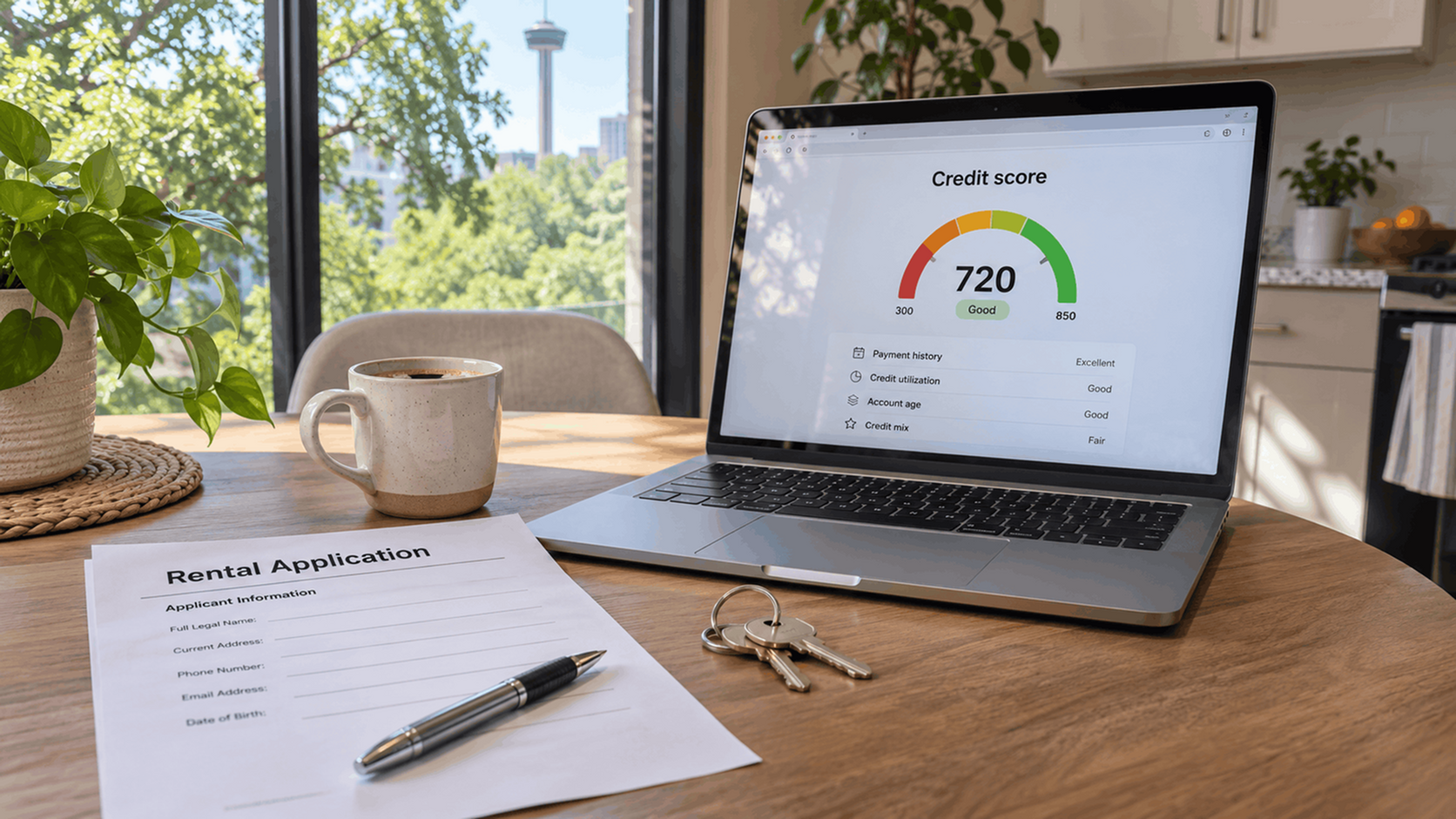
Quick Answer: What credit score do you need to rent near UTSA? There's no legal minimum in Texas, but many landlords look for roughly 620 to 650, and 700 or higher usually means a smoother approval. Your income, rental history, and background check matter too. A lower score can still work with a guarantor or larger deposit. Credit checks catch a lot of first-time renters off guard. If you're asking what credit score do you need to rent near UTSA, the honest answer is that each landlord sets its own bar, and the number is only one part of the decision. Onyx at Oslo apartments near UTSA serves students, healthcare workers, and young professionals in northwest San Antonio, so here's what the screening process actually looks like before you apply. What Credit Score Do You Need to Rent Near UTSA? Most apartment communities around UTSA and Loop 1604 don't publish one fixed cutoff. As of 2026, national rental listing sites put the typical minimum somewhere between 600 and 650, with luxury buildings closer to 700. Texas law doesn't set a floor. It does require landlords to tell you their criteria up front. The Typical Credit Score for Apartment Approval A credit score for apartment screening is usually your FICO or VantageScore, which both run from 300 to 850. Landlords read it as a quick signal of how you've handled bills. Late payments and collections hurt most. Scores aren't the whole picture, though. Some screening companies also build their own "resident score" from your credit file, rental records, and court data. The Federal Trade Commission notes that you may never see that score in the report you receive. Other Requirements for an Apartment Landlords Check The common requirements for an apartment go well beyond credit. Expect a leasing office to ask about: Gross monthly income, often around three times the monthly rent Past rental history and any evictions Criminal background, within the limits of fair housing law A valid photo ID and proof of employment or enrollment Students without full-time income often qualify with a guarantor instead. If you're comparing layouts and price points, browse the studio, one and two bedroom floor plans first, since rent level shapes the income you'll need to show. How Does a Tenant Screening Background Check Work? A tenant screening background check is a report a landlord buys from a screening company. It can pull together your credit history, rental payments, eviction filings, and criminal records. Under the Fair Credit Reporting Act, that company generally can't report negative information older than seven years, according to the FTC's guide to tenant background checks . Errors are more common than you'd think. In its November 2022 reports, the Consumer Financial Protection Bureau said renters had filed more than 16,000 complaints about incorrect information on their screening reports. What Goes Into a Rental Application Review Your rental application gives the landlord permission to run these checks. In Texas, Property Code Section 92.3515 says the landlord must make its tenant selection criteria available when you receive the application. Those criteria can cover credit history, income, rental history, and criminal history. If a landlord rejects you without having made that notice available, you're entitled to a refund of the application fee. Read that notice before paying anything. It tells you exactly what the property weighs. Your Rights If You're Denied Federal law gives applicants real protection here. If a landlord denies you, requires a co-signer, or asks for a higher deposit because of something in your report, it must send an adverse action notice. That notice names the screening company and explains your right to a free copy of the report if you request it within 60 days. You can then dispute anything that's wrong. What If Your Credit Score Is Low or You Have No Credit? Plenty of UTSA students have thin credit files or none at all. That isn't an automatic no. A thin file just means the landlord has less to go on, so other parts of your application carry more weight. So what credit score do you need to rent near UTSA if you're starting from scratch? Sometimes none, as long as a qualified guarantor signs with you. Credit Situation How Landlords Often Read It What Can Help 700 and above Strong history, faster approvals Keep balances low before you apply 620 to 699 Meets many standard community minimums Steady income and clean rental history Below 620 May trigger extra conditions Guarantor, larger deposit, or explanation letter No credit history Not enough data to score Guarantor plus proof of income or aid Any score One factor among several Read the selection criteria before paying a fee These ranges reflect general industry patterns, not one property's policy. Ask each leasing office for its written criteria. Are No Credit Check Apartments Worth It? Be careful with listings that advertise no credit check apartments. Legitimate properties exist, but this phrase is also a favorite of scammers. The FTC says people reported nearly 65,000 rental scams since 2020, with about $65 million in losses. A common trick is pushing you to buy a cheap "credit check" that quietly signs you up for a recurring membership. The FTC's rental listing scam warnings are worth a read before you send money anywhere. Ways to Strengthen Your Approval Odds The real question isn't only what credit score do you need to rent near UTSA, but how ready your file looks. Start by pulling your own reports. The three nationwide bureaus let you check each report free every week through AnnualCreditReport.com, the only site the FTC says is authorized for these orders. Fix errors before a landlord sees them. Then gather pay stubs, an offer letter, or financial aid documents, and line up a guarantor if your file is thin. Paying down a credit card balance can lift your score within a billing cycle or two. Frequently Asked Questions 1. What credit score do you need to rent near UTSA as a student? Many students qualify with little or no credit by adding a guarantor who meets the income and credit standards. Some communities also accept proof of financial aid or savings. Ask the leasing office how it handles student applicants before you pay the application fee, since policies differ from one property to the next. 2. Is a 600 credit score enough for Texas apartments? It can be. Plenty of Texas apartments approve applicants in the low 600s, especially with solid income and good rental references. Others may ask for a co-signer or a higher deposit. If that happens because of your report, the landlord must give you an adverse action notice explaining your rights. 3. How do I find apartments near me that accept lower credit scores? Searching apartments near me only gets you a list. Narrow it down with these steps: Ask each property for its written tenant selection criteria Confirm whether it accepts guarantors or co-signers Call the number on the property's official website, not the listing Tour in person before paying any deposit 4. Do pet friendly apartments run a separate screening? Your credit and background check usually stay the same. Pet friendly apartments often add their own pet policy, though, which may include breed or weight limits, a pet deposit or fee, and monthly pet rent. Some ask for vaccination records too. Confirm the pet rules alongside the rental criteria so there are no surprises at move-in. 5. Are New Braunfels rentals easier to qualify for than apartments near UTSA? Not necessarily. Credit standards are set by each landlord, not by the city, so New Braunfels rentals can be just as strict as communities in northwest San Antonio. Commute time to campus matters too. Check the neighborhood map and directions to see how close you'd be to UTSA and La Cantera. Conclusion What credit score do you need to rent near UTSA? There's no single number, but 620 to 650 is a common starting point, and income, rental history, and a guarantor can carry a lot of weight. Check your reports early, read the selection criteria, and know your rights if you're denied. When you're ready, explore the community amenities at Onyx at Oslo and talk with the leasing team about what it takes to apply in northwest San Antonio.

Read more
How to Apply for an Apartment in Texas: Easy Step Guide-image

Quick Answer: How to apply for an apartment in Texas comes down to five moves: set your budget, gather documents, read the tenant selection criteria, submit the application with its fee, and sign the lease once approved. Texas law treats you as rejected if the landlord doesn't confirm acceptance within seven days, so watch your inbox. A missing pay stub can stall an application as easily as a low credit score. Knowing how to apply for an apartment in Texas before you tour saves you days and sometimes a fee. If you're searching in northwest San Antonio near UTSA, the steps below apply at Onyx at Oslo apartments and at Texas apartments statewide. What Is a Rental Application in Texas? A rental application is a written request to lease a specific home from a landlord. Texas Property Code Chapter 92 defines it and sets the rules for fees, deposits, and response times. You'll share your identity, income, rental history, and consent to a background check so the landlord can decide whether to offer you a lease. Two payments usually come with it. The application fee covers screening costs and is generally nonrefundable. An application deposit is different. Texas law defines it as money that's refundable if you're rejected. Here's the catch many guides skip. Under Section 92.3515, the landlord must make printed tenant selection criteria available when you get the form, and you'll sign an acknowledgment that you had the chance to review them. If a landlord skips that notice and then rejects you, the fee and any deposit must be returned. How Do You Apply for an Apartment in Texas Step by Step? The fastest way to learn how to apply for an apartment in Texas is to treat it like a short project with a clear order. Each step below removes a common reason applications stall or get denied. Build Your Apartment Checklist First Pull everything together before you open a single form. A complete apartment checklist usually includes: A government-issued photo ID Recent pay stubs, an offer letter, or bank statements showing income Names and contact details for current and past landlords Your Social Security number or other identification the form requests Co-signer or guarantor details if your income is limited, which is common for students Follow These Steps in Order Set a realistic budget. Many communities look at rent compared with gross monthly income, so check the stated ratio in the criteria. Tour and pick a floor plan. Compare available studio, one, and two bedroom floor plans so you apply for the right unit and move-in date. Read the tenant selection criteria. Confirm the income, credit, rental history, and criminal history standards before paying anything. Submit the apartment application. Use your full legal name, including your middle name, and your date of birth so the screening company pulls the right records. Pay the fee and any deposit. Ask in writing which payment is refundable. Respond fast to follow-up requests. A missing document can push you past the seven-day window. Ready to start? You can begin the Onyx at Oslo online rental application once your documents are ready. Mistakes That Slow Down an Application Small errors cause plenty of delays. A nickname instead of a legal name can pull the wrong records. So can a mistyped birth date. Leaving a past address off the form looks like a gap in rental history, and uploading blurry pay stubs means the leasing team has to ask again. Applying to several communities at once also adds up fast, since each one charges its own fee. Anyone figuring out how to apply for an apartment in Texas on a tight timeline should double-check every field before hitting submit. What Happens During Tenant Screening and Apartment Approval? Tenant screening is the background review a landlord runs after you apply, and it's the part of how to apply for an apartment in Texas that you control least. It typically covers credit, past evictions, rental history, and criminal history, depending on the published criteria. The Federal Trade Commission notes that these reports are covered by the Fair Credit Reporting Act, which gives you specific rights as an applicant. As of November 2026, FTC guidance says screening companies generally can't report negative information older than seven years. If a landlord denies you based on a report, you're entitled to learn which company supplied it, and you can request a copy and dispute errors. The FTC's guide to tenant background checks explains the full process. Timing matters too. Texas Property Code Section 92.352 deems you rejected if the landlord doesn't give notice of acceptance on or before the seventh day after you submit a completed application. Rejecting one co-applicant counts as rejecting all co-applicants, so roommates should apply with complete, accurate files. Apartment Deposit vs. Application Fee Renters often mix these up. The table below shows how Texas law treats each payment. Payment What It Covers Refundable? Application fee Screening and processing costs Generally no, unless criteria notice was not provided Application deposit Holds the unit while you're reviewed Yes, if you're rejected Security deposit Damage or unpaid rent after you move in Yes, minus itemized deductions after move-out Bottom line Each payment has a different job Get refund terms in writing Once approved, the apartment deposit is often converted into part of your security deposit. The full rules live in Texas Property Code Chapter 92 . Reviewing Your Apartment Lease Before You Sign Approval isn't the finish line. Read the apartment lease for the term length, rent due date, late fees, renewal notice, and pet or parking rules. Ask questions now, because a signed lease is a binding contract. The Texas State Law Library's landlord and tenant guide is a free, plain-language reference. Frequently Asked Questions 1. How long does apartment approval take in Texas? Timing depends on the screening provider and how complete your file is. Texas law sets an outer limit: if the landlord doesn't notify you of acceptance by the seventh day after you submit a completed application, you're deemed rejected and can ask about refunds. 2. What documents do I need for a rental application? Requirements vary by property, but most Texas landlords ask for: Government-issued photo ID Proof of income, such as pay stubs or an offer letter Rental history with landlord contacts Consent to a background and credit check Guarantor details, if required 3. Is the application fee refundable in Texas? Usually not. The fee pays for screening. There's one exception worth knowing: if the landlord didn't make the printed tenant selection criteria available and then rejects you, Texas Property Code Section 92.3515 requires the landlord to return the fee and any deposit. 4. Can I apply for an apartment with no rental history? Yes. First-time renters, including many college students, often qualify by adding a guarantor, showing savings, or offering a larger deposit where the community allows it. Check the selection criteria first so you know which option the property accepts before you pay a fee. 5. What should I do if my application is denied? Ask which screening company supplied the report and request a free copy. Federal law lets you dispute inaccurate information with that company, and you should let the landlord know about the dispute. If the denial was tied to missing criteria notice, request your refund in writing. Conclusion: Applying for Texas Apartments With Confidence Learning how to apply for an apartment in Texas mostly means preparing early. Gather your documents, read the criteria, and know which payments come back to you. Do that, and approval in San Antonio or anywhere else in Texas gets far less stressful. If Onyx at Oslo is on your list, explore the community amenities before you apply, and you'll know exactly how to apply for an apartment in Texas the right way.

Read more
How to Apply for an Apartment in Texas: Easy Step-by-Step Guide-image

Quick Answer: Learning how to apply for an apartment in Texas starts with one habit: read the property's written tenant selection criteria before you pay anything. After that, how to apply for an apartment in Texas comes down to gathering ID and income proof, submitting the application and fee, passing screening, and signing the lease once you're approved. A rental application in Texas looks like a simple form, but state law shapes almost every part of it, from the fee you pay to how long the landlord has to answer. This guide covers how to apply for an apartment in Texas step by step, including the documents to gather and the rules that protect your money. Onyx at Oslo apartments in northwest San Antonio , serving renters near UTSA and the Loop 1604 corridor, put it together so your first application goes smoothly. What Is the Process of Renting an Apartment in Texas? The process of renting an apartment in Texas follows a predictable path. You shortlist communities, review each one's selection criteria, apply with documents and a fee, wait for a decision, then sign the lease and pay move-in costs. Texas law treats you as rejected if the landlord doesn't accept you within seven days of a complete application. Set a budget and shortlist communities. Compare rent, fees, move-in costs, and lease lengths. Browse available studio, one and two bedroom floor plans so you know which layout fits before you apply. Ask for the tenant selection criteria. Under Texas Property Code Chapter 92 , landlords must make their written criteria available when they give you the application, and you sign an acknowledgment that you had the chance to review it. Gather your documents. Photo ID, proof of income, past landlord contacts, and guarantor details if you need one cover most forms. Submit the apartment application. Pay the application fee and any application deposit the property requires. Go through screening. Expect checks on credit, rental history, income, and criminal background. Get the decision. Approval or denial should come within seven days of a complete application. Sign the lease and move in. Pay the security deposit and first month's rent, then document the unit's condition on move-in day. Most people skip step two. Don't. If you remember one thing about how to apply for an apartment in Texas, make it this: reading the criteria first is the best way to avoid losing a fee on an application you were never going to pass. What Are the Requirements for an Apartment Application in Texas? Most requirements for an apartment in Texas fall into four groups: identity, income, rental history, and background. Each community sets its own thresholds, so an income level or credit profile that works at one property may fall short at another. The written selection criteria is the only reliable answer for a specific building. Requirement What the Property Usually Reviews What to Have Ready Photo ID Identity match for screening Driver's license, state ID, or passport Income Ability to cover rent, often set as a multiple of monthly rent Recent pay stubs, an offer letter, or bank statements Rental history On-time payments and past lease issues Names and numbers for current and previous landlords Credit Payment history and outstanding debts Your own credit report, reviewed for errors ahead of time Criminal background Records judged against the published criteria Accurate answers on the form Guarantor Backup when income or history is thin The guarantor's ID and proof of income Bottom line Thresholds vary by property Request the written criteria before paying Students applying near UTSA often lean on a guarantor, since a part-time paycheck rarely meets a full income requirement on its own. Ask whether the property accepts out-of-state guarantors if a parent lives outside Texas. Application Fee vs. Application Deposit Texas treats these two payments differently, and mixing them up costs renters money. The application fee is nonrefundable and pays for processing and screening. An application deposit is refundable if the landlord rejects you. There's one big exception on the fee side: if the landlord rejects you without having made the selection criteria available, it must return both the fee and the deposit. Read the fine print on the deposit, too. Many Texas application forms let the landlord keep it if you're approved and then don't sign the lease, so apply only where you're ready to commit. Where Can You Find Texas Affordable Housing and Affordable Apartments in Texas? Texas affordable housing comes in two main forms. One is income-restricted units in properties supported by the Texas Department of Housing and Community Affairs. The other is federally assisted housing run through HUD and local housing authorities. Both set income limits, and both add their own paperwork on top of standard rental screening. That means how to apply for an apartment in Texas at an income-restricted property involves an extra step: verifying household income against the program's limits. The state's TDHCA apartment search resources point to its Vacancy Clearinghouse, which lists reduced-rent units across the state. Keep one caveat in mind: TDHCA doesn't own or manage these properties, and a TDHCA-supported unit doesn't pay your rent for you. Rent limits there are set by bedroom count, not by your personal income. For vouchers and public housing, start with HUD's rental assistance page and your local public housing authority. Waitlists are common, so apply early and keep your contact details current. Searching Housing Apartments Near Me the Smart Way Typing housing apartments near me into a search bar returns hundreds of listings, and some will be out of date. Call or message the leasing office to confirm a unit is actually available before you pay a fee. Compare what's included, like community amenities such as a resort pool and modern interiors , and check the map and directions to the neighborhood so your commute to class or work makes sense. Frequently Asked Questions 1. How long does it take to get approved for an apartment in Texas? Texas Property Code Section 92.352 says an applicant is deemed rejected if the landlord doesn't give notice of acceptance by the seventh day after a complete application. Many properties decide faster. Delays usually come from slow employer or landlord verification, so give your references a heads-up before you apply. 2. Is an apartment application fee refundable in Texas? Usually not. The fee covers processing and screening costs, so it stays with the landlord even if you're denied. The exception applies when the landlord rejects you without having made its written tenant selection criteria available. In that case, Texas law requires a refund of the fee and any application deposit. 3. What documents do I need to apply for an apartment? Whichever community you choose, how to apply for an apartment in Texas usually involves the same core paperwork: A government-issued photo ID Recent pay stubs, an offer letter, or bank statements Contact details for current and past landlords Guarantor information, if you're using one 4. Can I rent an apartment in Texas with bad credit? Often, yes. Some properties accept a guarantor or a larger security deposit when credit falls short. The selection criteria will tell you what's allowed. Review your own records first using the steps the Consumer Financial Protection Bureau outlines, and dispute any errors before a landlord sees them. 5. What if my application is denied because of a background check? Under the Fair Credit Reporting Act, a landlord who denies you based on a screening report must tell you and name the company that produced it. According to the CFPB, you can get a free copy of that report within 60 days of the denial and dispute anything inaccurate. Conclusion Knowing how to apply for an apartment in Texas mostly means knowing your rights before you pay. Ask for the selection criteria before you pay, and know the difference between a fee and a deposit. If you're looking at affordable apartments in Texas around northwest San Antonio, Onyx at Oslo is ready to walk you through the application.

Read more
2 Bed 2 Bath vs. 2 Bed 1 Bath: Is the Extra Bath Worth It?-image

Quick Answer: The 2 bed 2 bath vs. 2 bed 1 bath choice mostly comes down to who shares the space. A second bathroom gives each bedroom its own private bath, which matters most for roommates and frequent hosts. A 2x1 usually costs less and suits couples or solo renters who use the spare room as an office. Picture 7:30 on a weekday morning. Two people, two alarms, one shower. That single scene explains most of the 2 bed 2 bath vs. 2 bed 1 bath debate, and it's worth thinking through before you sign a lease. The team at Onyx at Oslo apartments near UTSA , serving renters across northwest San Antonio, put together this guide to help you weigh the second bathroom against rent, square footage and the people you'll live with. What to Look For in a 2 Bed 2 Bath vs. 2 Bed 1 Bath Layout Start with two questions: who will use each bathroom, and how often do you host overnight guests? Then study the floor plan itself. A listing that says "2 baths" tells you nothing about privacy if both bathrooms open onto the same short hallway, so the layout matters as much as the count. Typical 2 Bedroom Apartment Size and Where the Second Bath Goes Typical 2 bedroom apartment size depends on whose numbers you trust. RentCafe's analysis of Yardi data as of May 2026 puts the average U.S. two bedroom at 1,095 square feet. Apartments.com's Q1 2026 renter report lands lower, at 998 square feet. For new construction, the U.S. Census Bureau's 2025 Characteristics of New Housing found the median built-for-rent multifamily unit was 1,000 square feet, though that figure covers every bedroom count, not just two bedrooms. Here's the catch. A second full bathroom has to come from somewhere. Usually it's closet space, a slightly smaller living room or a tighter kitchen. When two units list the same square footage, ask what was traded to fit the extra bath. Split vs. Side-by-Side 2 Bedroom 2 Bathroom Floor Plans Not all 2 bedroom 2 bathroom floor plans deliver the same privacy. In a split plan, the bedrooms sit on opposite sides of the living area, each with its own bath. That's the roommate favorite, because nobody hears the other person's alarm or late phone call. Side-by-side plans put both bedrooms down one hallway with a shared wall. Often one bathroom is attached to the main bedroom and the second doubles as the hall bath for guests. Neither design is wrong. Just check where each bathroom door opens before you commit. Who Is a 2 Bedroom 1 Bathroom Unit Actually Right For? A 2 bedroom 1 bathroom unit works best when one household shares one routine. Couples and solo renters who want a home office or guest room tend to get the most from it. You'll typically pay less rent than for a comparable 2x2, and you'll only have one bathroom to clean every week. When a Two Bed One Bath Works A two bed one bath makes sense if your schedules rarely overlap. One person leaves at 6 a.m. and the other works from home starting at nine? The bathroom bottleneck barely exists. It also works when the second bedroom isn't really a bedroom. Plenty of renters turn it into an office, a gym corner or a hobby room, and an office doesn't need its own shower. The tradeoff shows up when guests stay the night. Your visitor uses your bathroom, sees your toothbrush and waits their turn in the morning, which is fine for a weekend and wearing over a long holiday visit. Roommates can make a 2x1 work too, but it takes a real agreement on shower times, cleaning duty and storage space. Is a 2x2 Apartment Worth the Extra Rent? For roommates, usually yes. A 2x2 apartment gives each person a private bath, which removes most of the friction over schedules and cleaning. The premium is real, though. One RentHop study found a two bedroom with two baths cost anywhere from 16% to 62% more than a two bedroom with one bath, depending on the city, so the gap you'll see varies a lot by market. Here's how the 2 bed 2 bath vs. 2 bed 1 bath tradeoffs stack up side by side. Factor 2 Bed 2 Bath 2 Bed 1 Bath Morning routine Two people can get ready at once Needs a shared schedule Privacy Each bedroom has its own bath Residents and guests share one bath Cleaning Two bathrooms to keep up One bathroom to clean Rent Typically higher Typically lower Use of square footage Some space goes to the extra bath More space can go to living areas Best fit Roommates, frequent hosts, partners on different schedules Couples, solo renters with an office, budget-first households Size isn't the whole story either. At Onyx at Oslo, the two bedroom 2x2 floor plans fit two full bathrooms into about 769 square feet, well under the national averages above. An efficient layout like that lets roommates keep private baths without paying for square footage they won't actually use. How the Second Bathroom Fits Your Apartment Budget Run the math per person, not per unit. Divide the total rent by two, add each person's share of utilities, then compare that number with what one of you would pay alone. HUD considers households that spend more than 30% of income on housing to be cost burdened , so that 30% line is a useful ceiling for any apartment budget. Bundled bills simplify this. When utilities, cable and Wi-Fi are included in rent, there's no separate bill to split and nobody fronting the internet payment each month. That's part of the community amenities at Onyx at Oslo . Once the per-person numbers are on paper, the 2 bed 2 bath vs. 2 bed 1 bath question often answers itself. Frequently Asked Questions 1. Should I rent a 1 or 2 bedroom if I live alone? Choose a 1 or 2 bedroom based on how you'll use the extra room. If you work from home or host family often, a two bedroom earns its rent. If the spare room would sit empty, a one bedroom keeps more money in your pocket. Most solo renters don't need a second bathroom. 2. Is a two room apartment the same as a two bedroom? Not always. A two room apartment can mean one bedroom plus a living room, especially in older listings or outside the U.S. A two bedroom has two separate rooms meant for sleeping, plus a living area. Always confirm the bedroom count and look at the floor plan before scheduling a tour. 3. Is the 2 bed 2 bath vs. 2 bed 1 bath difference worth it for couples? Often it isn't. Couples share a bedroom, so a single bathroom usually covers daily needs. A second bath becomes worth it when partners leave for work at the same time, when you host guests regularly, or when one person works from home and wants a separate space for video calls. 4. What should I check when touring apartments near me with two bedrooms? When you tour apartments near me listings with two bedrooms, check these details in person: Whether the bedrooms are split or share a wall Which bathroom guests would use Closet and storage space in each bedroom Your commute, using the map and directions to campus and work 5. Can roommates share a 2 bed 1 bath without problems? Yes, with clear rules. Agree on shower times, a cleaning rotation and how you'll split shelf space before move-in day. Roommates with opposite schedules, like a night-shift worker and a day student, often share one bathroom easily. Similar schedules usually make a 2x2 worth the extra rent. Conclusion The 2 bed 2 bath vs. 2 bed 1 bath decision comes down to people, not square footage. Roommates and frequent hosts get real value from a private second bath, while couples and solo renters with an office can usually save with a 2x1. Run the per-person budget, walk the floor plan in person, and you'll know which layout fits. If you're looking near UTSA in northwest San Antonio, the 2x2 layouts at Onyx at Oslo are built for exactly that roommate setup.

Read more
Splitting Rent, Utilities, and Groceries: A Roommate Money Guide-image

Quick Answer: Splitting rent, utilities, and groceries starts with agreed rules for each expense. Divide rent equally when rooms are comparable, or negotiate different shares when they aren't. Use an agreed formula for shared services. Keep personal food separate, and record who pays each bill and when reimbursements are due. Splitting rent, utilities, and groceries gets easier once everyone can see the same numbers. Serving San Antonio near UTSA, Onyx at Oslo apartments offers a starting point for planning shared living costs. Use this guide to choose fair amounts before moving in. What is a roommate budget? A roommate budget is a written plan showing shared household costs and each person's payment responsibilities. It separates bills paid together from purchases paid individually. The goal is to make obligations visible before money leaves anyone's account, so one person doesn't quietly finance the household. Start with a shared spreadsheet. Include the bill, total, split, payer, and reimbursement status. The Consumer Financial Protection Bureau recommends tracking spending for at least two weeks, or up to a month, to understand your habits. Living with roommates also works better when everyone approves new shared purchases before checkout. Splitting rent, utilities, and groceries needs a separate rule for each category. Before signing, list one-time expenses separately from recurring payments. Agree who owns furniture bought together and how you'll handle shared purchases when someone leaves. Keep deposits documented separately so they don't look like money available for everyday spending. How do you split rent fairly? An equal rent split is a practical starting point when bedrooms and access to amenities are similar. If one person gets a larger room or private bathroom, agree on a premium before choosing rooms. Consider shared space, too: bedroom square footage alone doesn't capture the full value of the apartment. Choose how to split expenses For two comparable rooms, divide monthly rent by two. For unequal rooms, agree on dollar amounts or percentages that add up to the full rent. A 55/45 split of $1,600 is $880 and $720. That is one negotiated example, not a standard rule. An income-based arrangement is another option if everyone wants it. Revisit that arrangement when income changes, and keep the household plan consistent with the lease. Have each roommate name what they would pay for each bedroom, then compare the totals with the actual rent. If both want the same room at the proposed prices, revisit the premium. Set the final amounts before anyone commits to the apartment. Splitting rent, utilities, and groceries: a monthly example This hypothetical household uses different rent shares and equal shares for other agreed costs. Figures are illustrative, not Onyx pricing or U.S. averages. Utilities and internet are separately billed in this example. Monthly expense Total Roommate A Roommate B Rent, agreed 55/45 split $1,600 $880 $720 Utilities, split equally $160 $80 $80 Internet, split equally $60 $30 $30 Shared staples, split equally $120 $60 $60 Total shared costs $1,940 $1,050 $890 Shared groceries here mean a small staples fund. Add personal food, transportation, and other individual costs to your own budget. Record reimbursements as transfers, not new expenses, so a $60 repayment doesn't become another $60 of household spending. Settle roommate bills accurately Compare each person's total share with what they paid to providers. In the sample budget, if A pays $1,760 for rent and utilities while B pays $180 for internet and staples, B owes A $710. After that transfer, A's net cost is $1,050 and B's is $890. How should bills be split with roommates? Use a separate rule for each kind of bill. Services everyone uses can be divided equally, while optional purchases should involve only those who agree to them. Assign one person to submit each payment, give everyone access to receipts, and set a reimbursement deadline that leaves time for processing. Splitting utility bills without double counting Onyx's included apartment amenities , reviewed November 6, 2026, list utilities, cable, and Wi-Fi. Ask the leasing team to confirm what your quoted monthly charge includes and whether any limits or additional charges apply. Count included services once within housing costs, rather than adding separate estimates. For separately billed services, agree on the split before the bill arrives. Discuss travel absences in advance instead of assuming an empty bedroom cancels fixed charges. The CFPB's bill calendar guidance recommends tracking amounts and due dates. Add a second deadline for roommates to reimburse the account holder. For example, roommates might reimburse a bill due on the 10th by the 5th. Confirm that this leaves enough time for the chosen payment method. A shared reminder should identify the amount owed without exposing account passwords. Build a grocery budget everyone accepts Splitting rent, utilities, and groceries doesn't require sharing every purchase. Keep personal food separate and fund only approved shared staples. On a $90 receipt, assume $30 is the shopper's personal food and $60 is shared. With a 50/50 split of the shared portion, the other roommate owes $30. Decide whether delivery fees are shared before someone places an expensive convenience order. Set a weekly cap and check the pantry before shopping. The EPA's food waste guidance recommends planning meals around what you already have. Compare cost per ounce using NIST's unit-pricing guidance . A bigger package helps only when you'll use what you buy. Before you Venmo roommates Agree on one way to send repayments and label each transfer with its purpose and month. The FTC's payment-app guidance recommends checking recipient details and enabling multifactor authentication or a PIN. Confirm unexpected requests directly with your roommate. Keep a ledger with two separate checks: roommate reimbursed and provider paid. Sending money to a roommate doesn't confirm the landlord received rent. Check transfer timing and fees before choosing a payment method. Frequently Asked Questions 1. What should a roommate agreement include? Write down the household rules before the first payment. Include: Rent shares and each person's responsibility for other shared bills. Payment deadlines, receipts, and the method used to settle balances. Shared food limits and approval rules for new household purchases. How to handle overdue repayments, departures, and any jointly funded deposits. 2. Should roommates split groceries equally? Only when everyone agrees to share the same items and uses them in roughly similar amounts. Different diets or schedules can make separate shopping easier. A hybrid plan keeps individual meals separate while splitting approved basics. Include relevant taxes, discounts, and delivery charges when allocating a shared receipt. 3. How can you manage a student budget with irregular income? Start with money you can reasonably count on, then schedule housing payments around when funds arrive. Divide money intended to last a semester across the months it must cover. Keep personal spending separate from household obligations, and build a small buffer when possible. Avoid commitments that depend on unconfirmed shifts. 4. What should you do if a roommate pays late? Check whether the issue is a missing receipt, an incorrect amount, or a delayed transfer. Confirm the balance privately and agree on a specific repayment date in writing. If a provider payment could be missed, contact that provider promptly. Revisit the household arrangement if late payments keep happening. 5. How often should roommates review their budget? Review splitting rent, utilities, and groceries once a month and whenever the household changes. Compare planned costs with actual receipts, settle balances, and agree on adjustments before the next billing cycle. Consumer.gov recommends using each month's actual spending to improve the following month's budget. Conclusion Splitting rent, utilities, and groceries works best when everyone's share is clear and each payment can be checked. Choose your rules before move-in, then adjust them together as circumstances change. For a San Antonio move, explore Onyx at Oslo's available floor plans and ask the leasing team for a full breakdown of recurring charges before building your shared plan.

Read more